How Does the Champions Cup Work? 2026/27 Format, Qualification and Bonus Points Explained

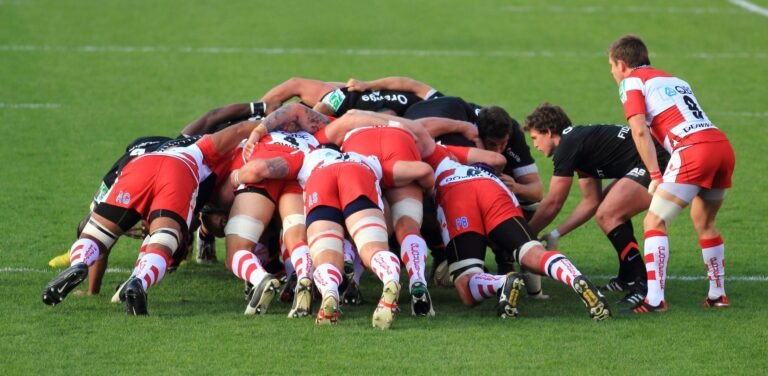
The Investec Champions Cup brings together 24 of the leading rugby clubs from Ireland, Britain, France, Italy and South Africa in the biggest competition in northern hemisphere club rugby.
For Irish supporters, Leinster, Munster and Connacht are competing for the trophy in 2026/27, with the Champions Cup making an unusually early October return this season. The earlier start gives the provinces little time to settle into their domestic campaigns before European rugby takes centre stage, as we explored in our preview of Ireland’s provinces ahead of the new Champions Cup season.
So how does the Champions Cup actually work? Here is everything you need to know about the 2026/27 competition.
What Is the Investec Champions Cup?
The Investec Champions Cup is the top-level club rugby competition organised by European Professional Club Rugby, better known as EPCR.
It brings together leading clubs from the United Rugby Championship, France’s TOP 14 and England’s Gallagher PREM, with teams progressing from a four-round pool stage into knockout rugby. Although historically regarded as European rugby’s premier club competition, the tournament now extends beyond Europe following the introduction of South African sides through the URC.
For Irish rugby, it remains one of the biggest prizes in the club game. Leinster, Munster and Ulster have all previously lifted the trophy, while Leinster begin the 2026/27 competition chasing a fifth title after finishing runners-up last season.
How Many Teams Are in the Champions Cup?
There are 24 teams in the 2026/27 Champions Cup, with eight qualifiers coming from each of the United Rugby Championship, France’s TOP 14 and England’s Gallagher PREM.
Those 24 teams are divided into four pools of six. There are restrictions on the draw, with no pool containing more than two clubs from the same league, while clubs from the same URC Shield cannot be drawn together. For the Irish sides, that means Leinster, Munster and Connacht are kept apart during the pool stage.
Which Irish Teams Are in the 2026/27 Champions Cup?
Three Irish provinces are competing in the Champions Cup this season: Leinster, Connacht and Munster.
Leinster are in Pool 1 alongside Glasgow Warriors, Section Paloise, Sale Sharks, Leicester Tigers and Clermont Auvergne.
Connacht have been drawn in Pool 2 with Toulouse, Lions, Saracens, Stade Rochelais and Exeter Chiefs.
Munster are in Pool 3 alongside defending champions Union Bordeaux Bègles, Stormers, Racing 92, Bristol Bears and Gloucester.
Ulster are competing in the EPCR Challenge Cup rather than the Champions Cup in 2026/27.
How Does the Champions Cup Pool Stage Work?
This is one of the more unusual elements of the Champions Cup format. Although each pool contains six teams, clubs do not play all five of their pool opponents.
Instead, every team plays four matches against four different opponents, with two games at home and two away. Clubs from the same league cannot play one another during the pool stage, meaning two teams can appear in the same Champions Cup pool without ever actually meeting.
The pool stage consists of four rounds, beginning in October and continuing through December and January. With only four matches available, there is relatively little room for error and bonus points can become particularly valuable when the final standings are calculated.
How Do Champions Cup Points Work?
Teams receive four match points for a win and two for a draw, with no match points awarded for a defeat. Two different bonus points are also available.
A losing bonus point is awarded to a team defeated by seven points or fewer. The attacking bonus point has changed for the 2026/27 season and is no longer awarded simply for reaching a fixed number of tries.
Instead, a team must score at least three tries more than its opponent to collect the attacking bonus point.
What Is the New Champions Cup Try Bonus Point Rule?
Under the previous system, teams could earn an attacking bonus point by scoring four tries regardless of how many their opponents scored. EPCR has changed that system for 2026/27.
A team must now finish the match having scored at least three more tries than the opposition. A side scoring three tries while conceding none, for example, can collect the bonus point. A team scoring five tries but conceding three would not.
It creates an interesting tactical change because the bonus point is no longer secured permanently once a team reaches a particular try total. An opponent can deny a side the extra point by reducing the difference in tries later in the match.
EPCR says the change is intended to reward attacking rugby while keeping matches competitive for longer, with defence now having a direct influence on whether the attacking bonus is secured.
How Do Teams Qualify for the Champions Cup Round of 16?
Qualification for the Round of 16 has also changed for 2026/27.
Previously, the top four teams in each of the four pools automatically advanced. Now only the top three in each pool are guaranteed a place in the knockout rounds, producing 12 automatic qualifiers.
The final four places are awarded to the four remaining clubs with the highest number of match points across all four pools, regardless of their position within their own pool. A team finishing fourth is therefore no longer guaranteed to progress, while a club finishing lower could theoretically qualify if it has accumulated enough points compared with teams elsewhere.
It effectively creates a second standings battle across the entire competition. Teams are not only competing against the other clubs in their own pool but, when it comes to the final four qualification places, against clubs in the other three pools as well.
What Happens to Champions Cup Teams That Do Not Qualify?
Missing out on the Champions Cup Round of 16 does not necessarily mean the end of a club’s European season.
Once the 16 Champions Cup qualifiers have been established, the next four highest-ranked clubs across the four pools drop into the Round of 16 of the EPCR Challenge Cup. These places are also decided according to match points across all pools rather than simply being assigned to a particular finishing position.
The remaining Champions Cup teams are eliminated from European competition.
What Happens if Teams Finish Level on Points?
If two or more clubs in the same pool finish level on match points, the first tiebreaker is the number of matches won.
If they still cannot be separated, overall points difference during the pool stage is considered next, followed by the number of tries scored. If all of those criteria remain equal, the final method of separating the teams is drawing lots.
The change placing wins ahead of points difference is particularly significant in 2026/27 because clubs from different pools can now find themselves competing for the same wildcard qualification positions.
How Does Champions Cup Knockout Seeding Work?
Reaching the Round of 16 is only part of the job. Pool-stage performance also determines a club’s seeding and therefore its route through the knockout rounds.
Pool winners take the top four seeds, ranked from 1 to 4, with the four runners-up occupying positions 5 to 8. Third-placed clubs are ranked from 9 to 12, while the four additional qualifiers take seeds 13 to 16.
In the Round of 16, the highest seed faces the lowest, meaning seed 1 plays seed 16, seed 2 meets seed 15 and so on through to seed 8 against seed 9. Home advantage also goes to the top eight seeds.
That gives clubs an incentive to do considerably more than simply scrape through the pool stage. A strong ranking can provide both home advantage and, at least on paper, a more favourable opening knockout tie.
How Do the Champions Cup Knockout Rounds Work?
Every Champions Cup knockout tie is decided over a single match. There are no two-legged fixtures.
The eight Round of 16 winners advance to the quarter-finals, followed by four teams progressing to the semi-finals and ultimately two reaching the final. Home advantage in the quarter-finals is determined by the clubs’ original pool-stage rankings, while semi-final venues are designated according to the competition rules.
If a knockout match is level at the end of normal time, extra time is played. Should the scores remain level after extra time, the number of tries scored during the match is used as the next tiebreaker. If the teams have also scored the same number of tries, the winner is decided through a place-kick competition.
When Are the 2026/27 Champions Cup Matches?
The Champions Cup is played across eight weekends, comprising four pool rounds and four knockout rounds.
| Stage | Dates |
|---|---|
| Round 1 | 16–18 October 2026 |
| Round 2 | 11–13 December 2026 |
| Round 3 | 8–10 January 2027 |
| Round 4 | 15–17 January 2027 |
| Round of 16 | 2–4 April 2027 |
| Quarter-finals | 9–11 April 2027 |
| Semi-finals | 30 April–2 May 2027 |
| Final | 22 May 2027 |
The gaps between rounds give the competition a very different rhythm to a domestic league. A result or bonus point collected in October can still have a direct bearing on a club’s qualification prospects when the pool stage concludes three months later.
Where Is the 2027 Champions Cup Final?
The 2027 Investec Champions Cup final will be played at OL Stadium in Lyon on Saturday, 22 May 2027.
The match forms part of EPCR Finals Weekend, with the Challenge Cup final taking place at the same stadium on Friday, 21 May. Lyon’s stadium previously staged the Champions Cup final in 2016 and will host the competition’s showpiece for a second time.
Why Has the Champions Cup Format Changed in 2026/27?
The basic shape of the Champions Cup remains familiar. There are still 24 teams, four pools, four pool matches for each club and 16 places available in the knockout rounds.
The difference is the level of jeopardy attached to those matches. Removing guaranteed qualification for every fourth-placed team means clubs around the qualification line must now compare their records with teams across the other pools. Meanwhile, the new three-try-margin bonus rule means an attacking bonus point can be gained or lost depending on what both teams do throughout the match.
With only four pool games available to build a points total, the consequences can be significant. A single victory, losing bonus or late try could eventually determine whether a club reaches the Champions Cup knockouts, drops into the Challenge Cup or sees its European campaign end in January.
For Leinster, Munster and Connacht, the aim is ultimately the same: negotiate four pool matches, secure the best possible knockout seeding and remain on the road to Lyon.